Starred Review from
Library Journal!
“The lush, magical prose and exploration of storytelling power will appeal to fans of Patricia A. McKillip, Wen-yi Lee, and Andrea Hairston....
Hur has written a truly entrancing novel about the way stories woven through family, heritage, and history can imprison the unwary when unchallenged.”
Goodreads Editors’ Pick/ Amazon Editors’ Pick/
Literary Hub’s Recommended/ Book Riot’s Best New Releases
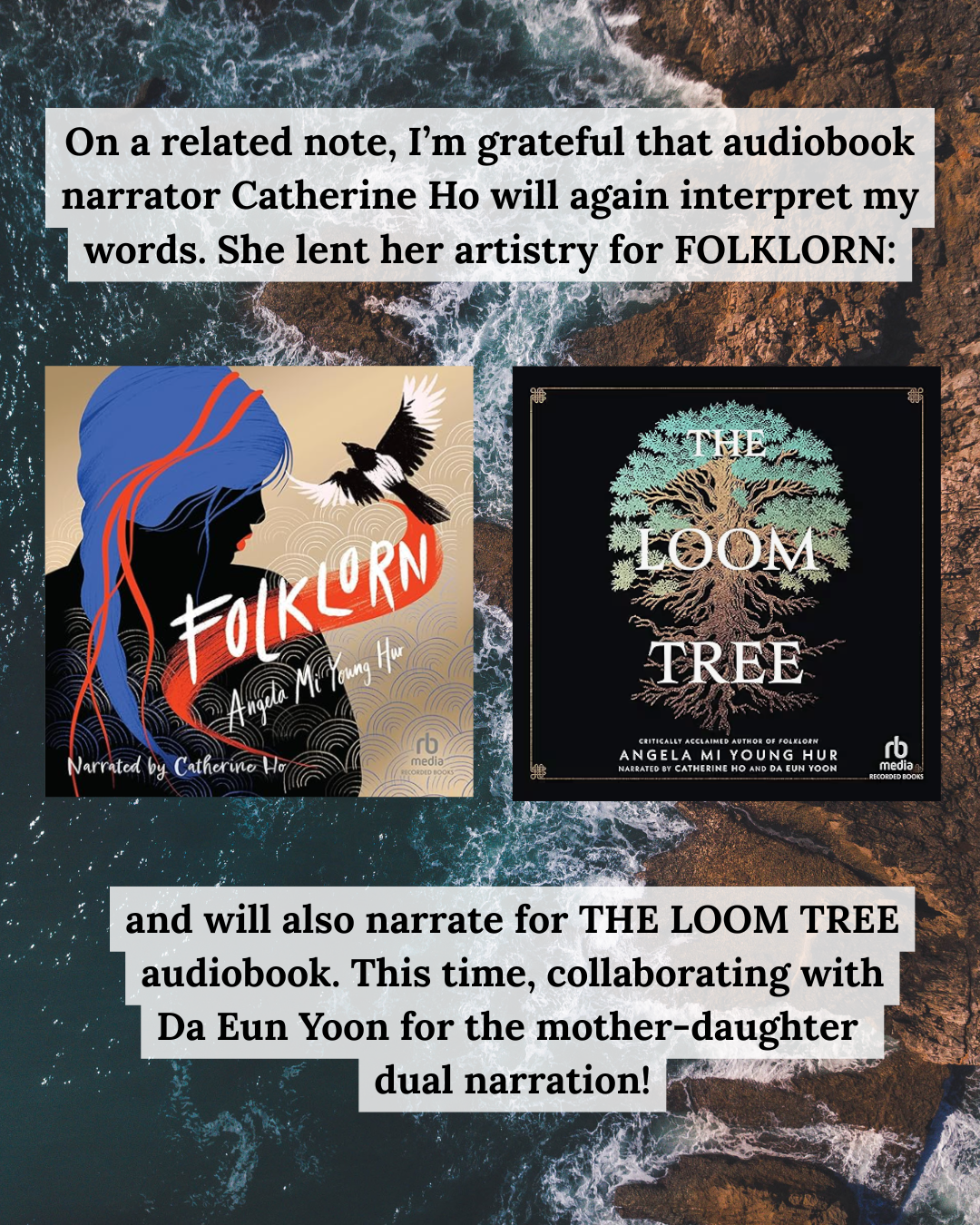
Now available as hardcover, e-book & audiobook narrated by Catherine Ho and Da Eun Yoon
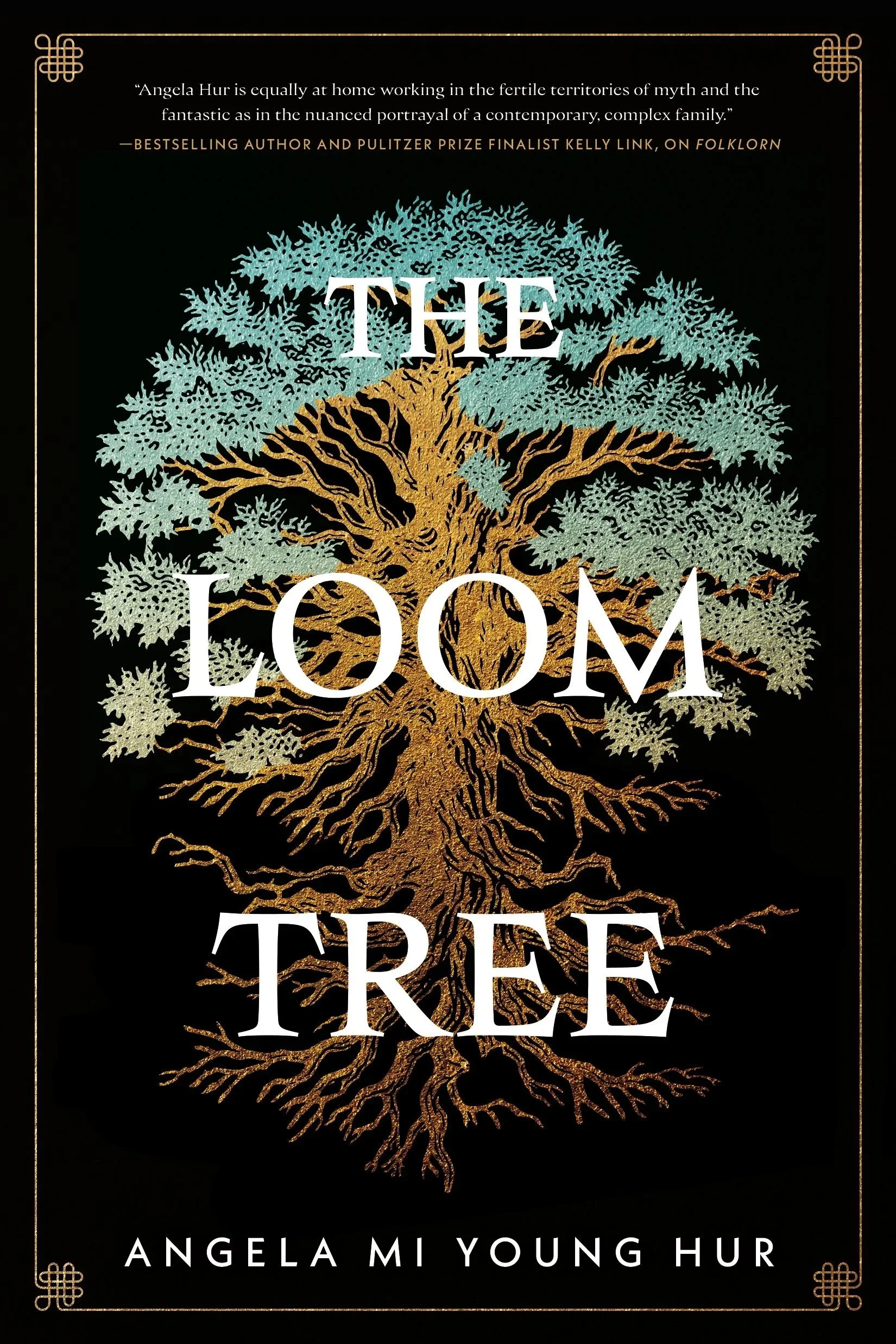
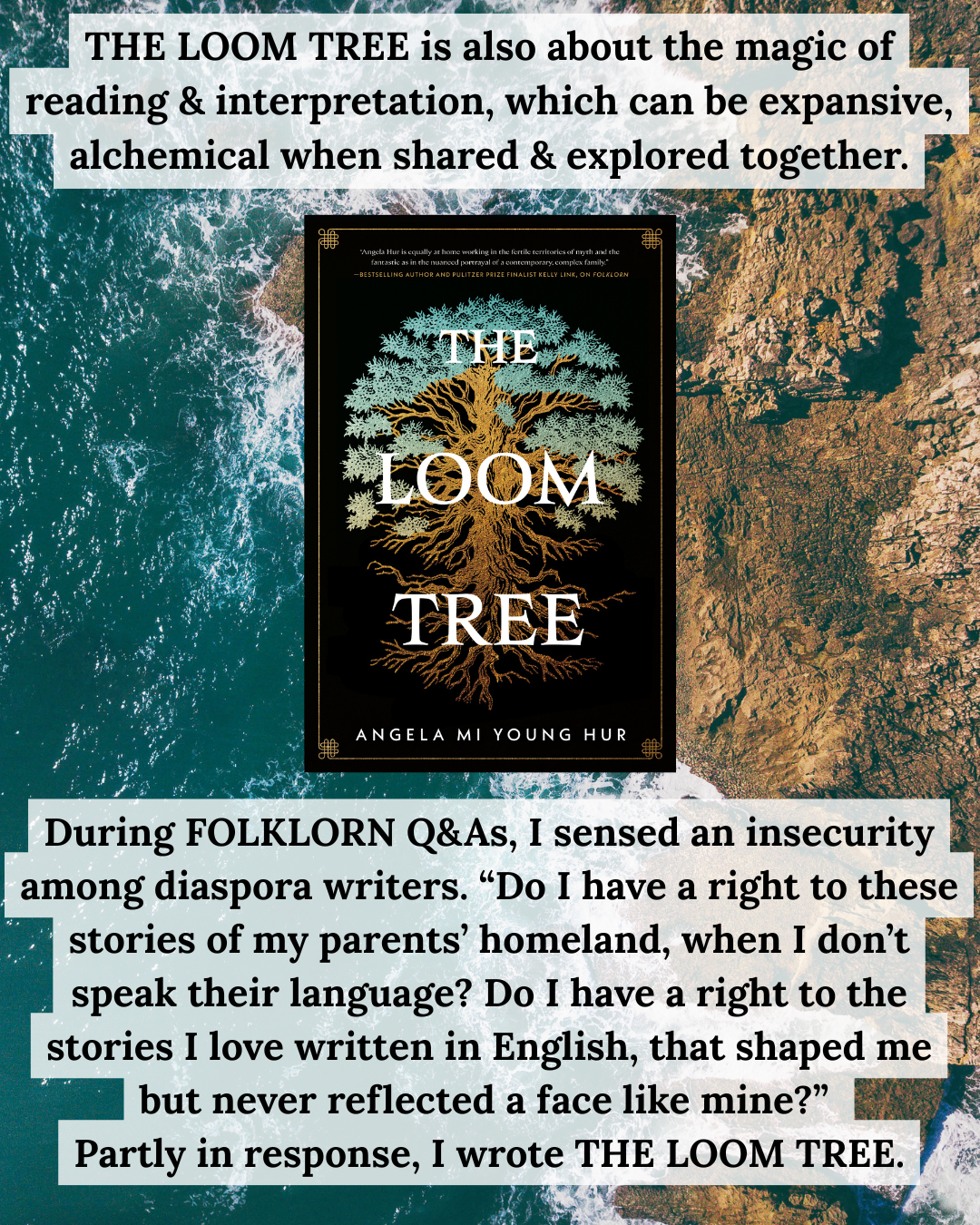
THE LOOM TREE
An adult literary fantasy written for all of us children of fairy tales, about preserving our stories and histories and passing them on, defying those who seek to deny, diminish or erase us.
My take on “East of the Sun and West of the Moon” and Ungnyeo the Bear Woman of Korean origin myth, set on a college campus and stretching across a dual timeline between a mother and a daughter. Also featuring a moody musician son of Bluebeard, a fragile daughter of a lesser Cinderella, and many other borderless, cross-cultural figures of fairy tale, folklore, and proto-myth spanning continents.
A love letter to the study of interdisciplinary liberal arts and to coming-of-age narratives of adolescence and motherhood, full of mythic and pop-cultural archetypes and identity-cultivation through music, literature, film, fashion, infatuation and desire.

Epic Mythology Books for Your TBR
Angela Mi Young Hur’s The Loom Tree is an ambitious and beautifully layered fantasy that blends Korean mythology, folklore, and magical academia into something wholly original. Through dual timelines, the novel explores identity, family history, and the stories that shape who we become, all while delivering the kind of immersive world-building fantasy readers love. The magical university setting, fairy-tale lineages, and emotionally resonant mother-daughter relationship give the novel remarkable depth. Richly imagined and lyrical from beginning to end, The Loom Tree promises an unforgettable reading experience that will especially appeal to fans of myth-infused fantasy and literary speculative fiction.
Back to school with dark academia
The Loom Tree will appeal to readers of many genres thanks to its engrossing multigenerational relationships, as V’s relationship with Sharon is juxtaposed with Sharon’s relationship with her own mother. Author Angela Mi Young Hur refreshingly subverts dark academia tropes through V’s casual teen vernacular and the inclusion of Korean American characters and folklore in a typically Eurocentric subgenre.
“Magical, surreal, and wonderfully eccentric. It wouldn't be fair to compare The Loom Tree to The Secret History or Jonathan Strange and Mr. Norrell, but if both those books had a fever dream, it might approximate this book. The Loom Tree manifests its own subgenre—fairytale dark academia, perhaps?—with audacious swagger, and reckons with the past by reckoning with the scope of story. I highly recommend for lovers of fairytales and mythology, particularly for anyone who longed to see themselves in those stories, or who searched for a story where they could belong.”
—Olivie Blake, New York Times bestselling author of The Atlas Six
“Rich and textured as a tapestry, The Loom Tree weaves the danger and intrigue of dark academia with the enchantment and resonance of story: the secret histories of our families, the folk tales that untangle ancestral memories and tap into our intertwined roots, and the tales we write and rewrite for ourselves just as we are coming into our own power. Mesmerizing.”
—Laura Ruby, Two-Time National Book Award Finalist and Author of Bone Gap
“The Loom Tree is an alchemical gyre of myth and family history, friendship and song, all expertly woven into a delightful tale of magical academia. It is endlessly surprising and immensely moving—a story of stories reclaimed, reinvented, and set free.”
—Jedediah Berry, Crawford Award-winning author of The Naming Song
“From the moment I first stepped into the world of The Loom Tree, I was swept up in its spell. Angela Mi Young Hur has woven a fever dream of a modern fairy tale within the pages of a book that is at once an innovative campus novel, a reclamation of lost heritage, and a deep-dive into the world’s myths, all with a resonant and deeply human Korean-American experience beating at its fantastical heart.”
—Lynn D. Jung, author of Mothsblood
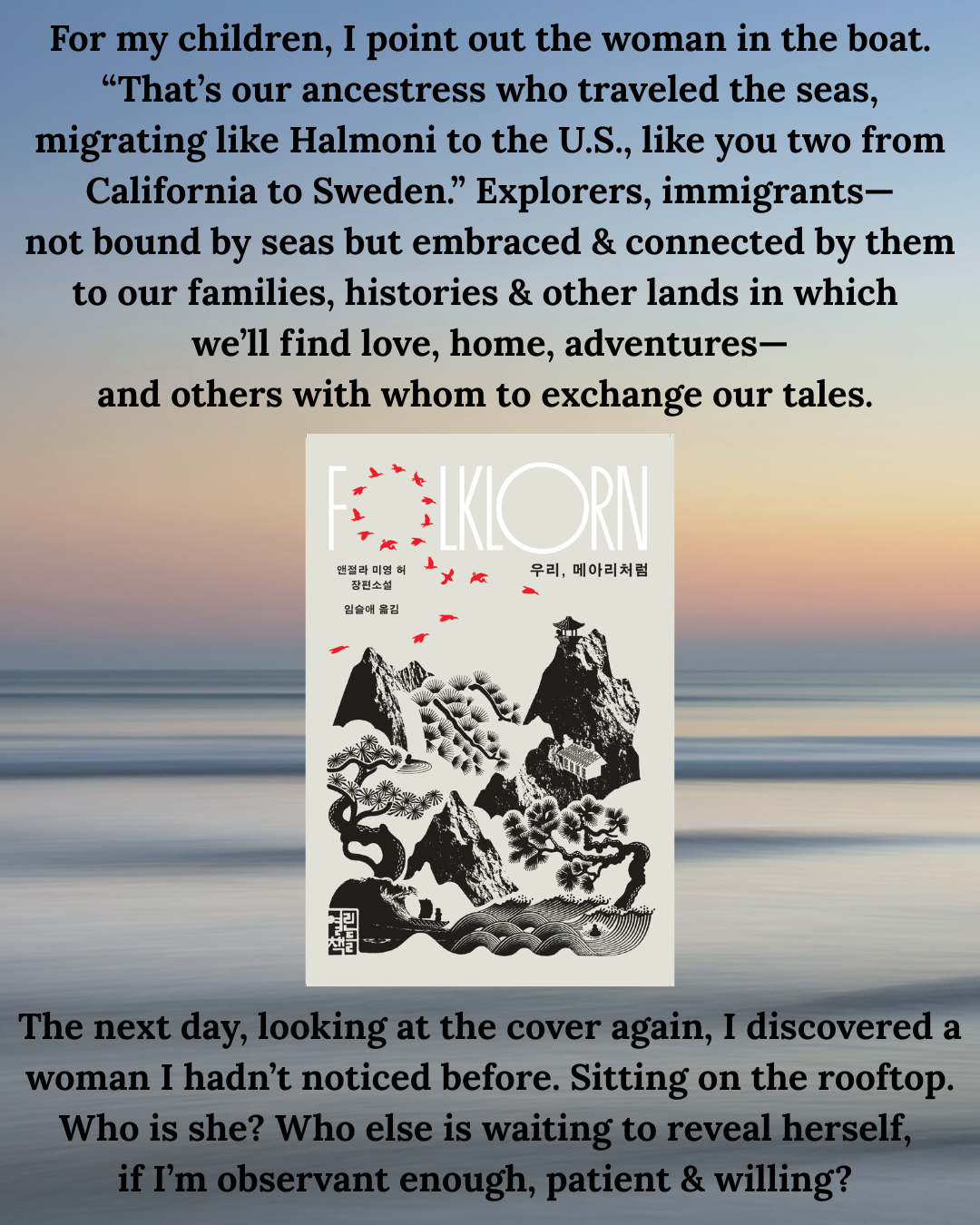
Folklorn is available in all formats
The New York Times Book Review’s “10 Best Sci-Fi/ Fantasy Books of 2021,” chosen by Amal El-Mohtar /
NPR’s “Books We Love” 2021 / Indie Next /
Featured in Newsweek, The Boston Globe, Locus & elsewhere
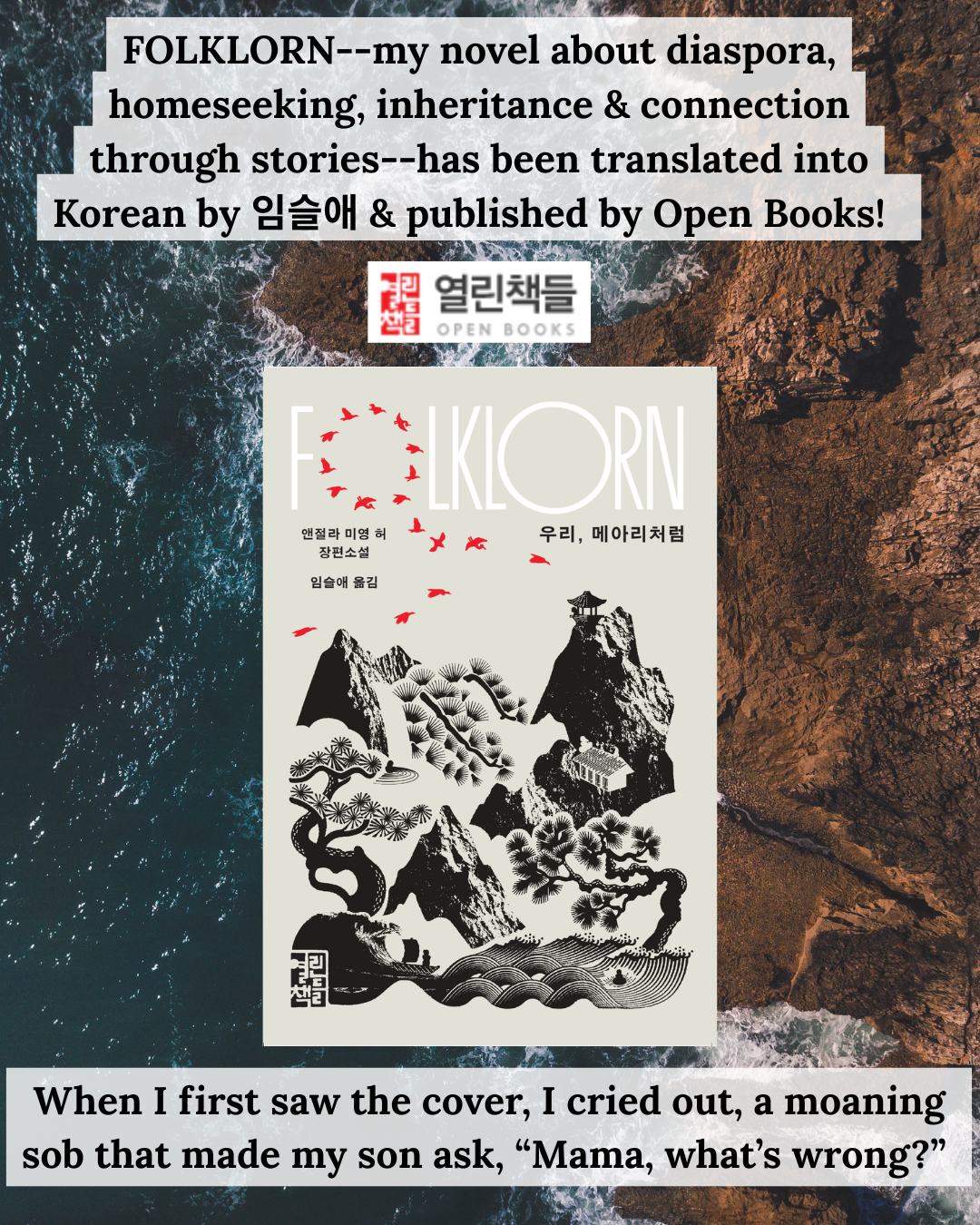
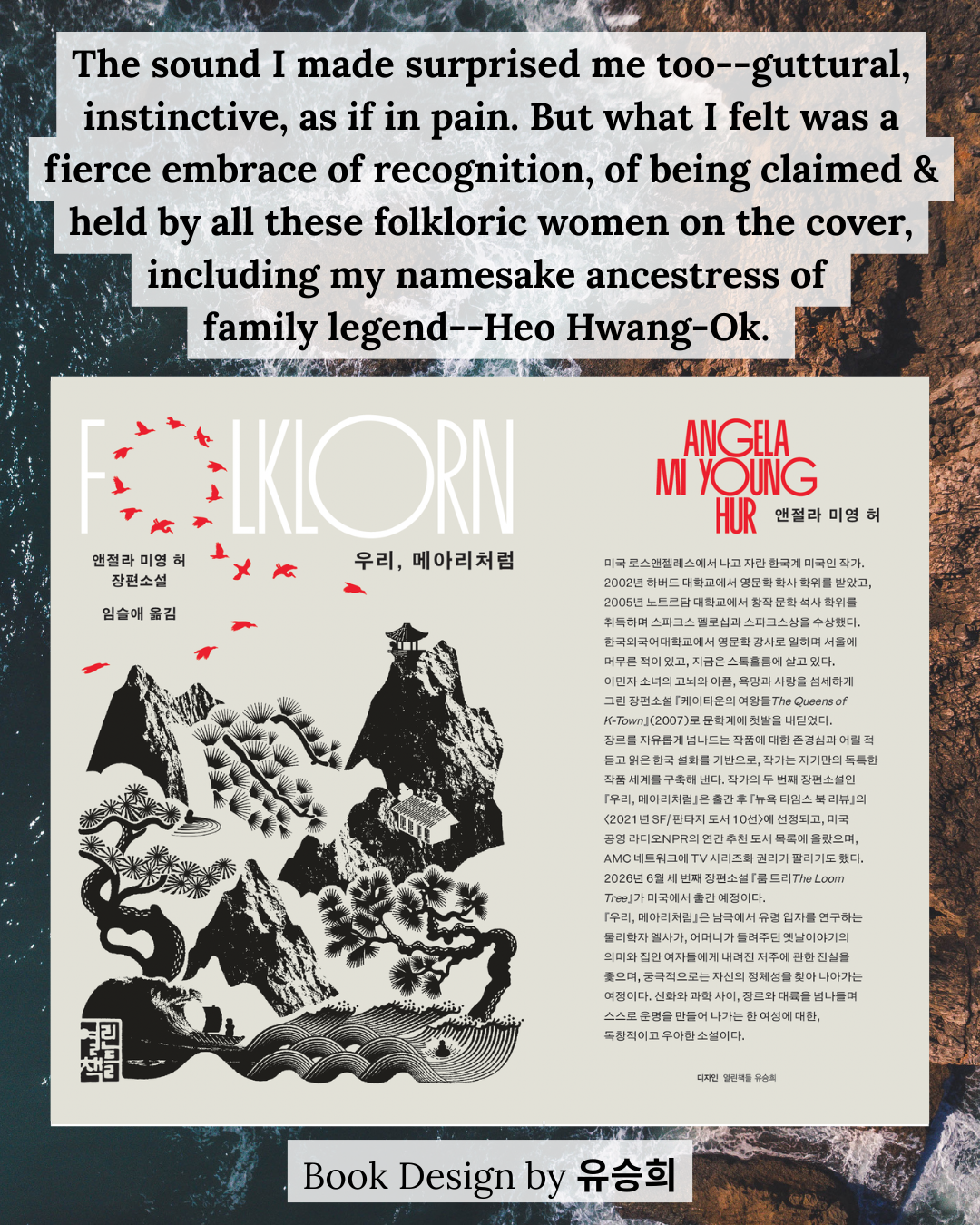
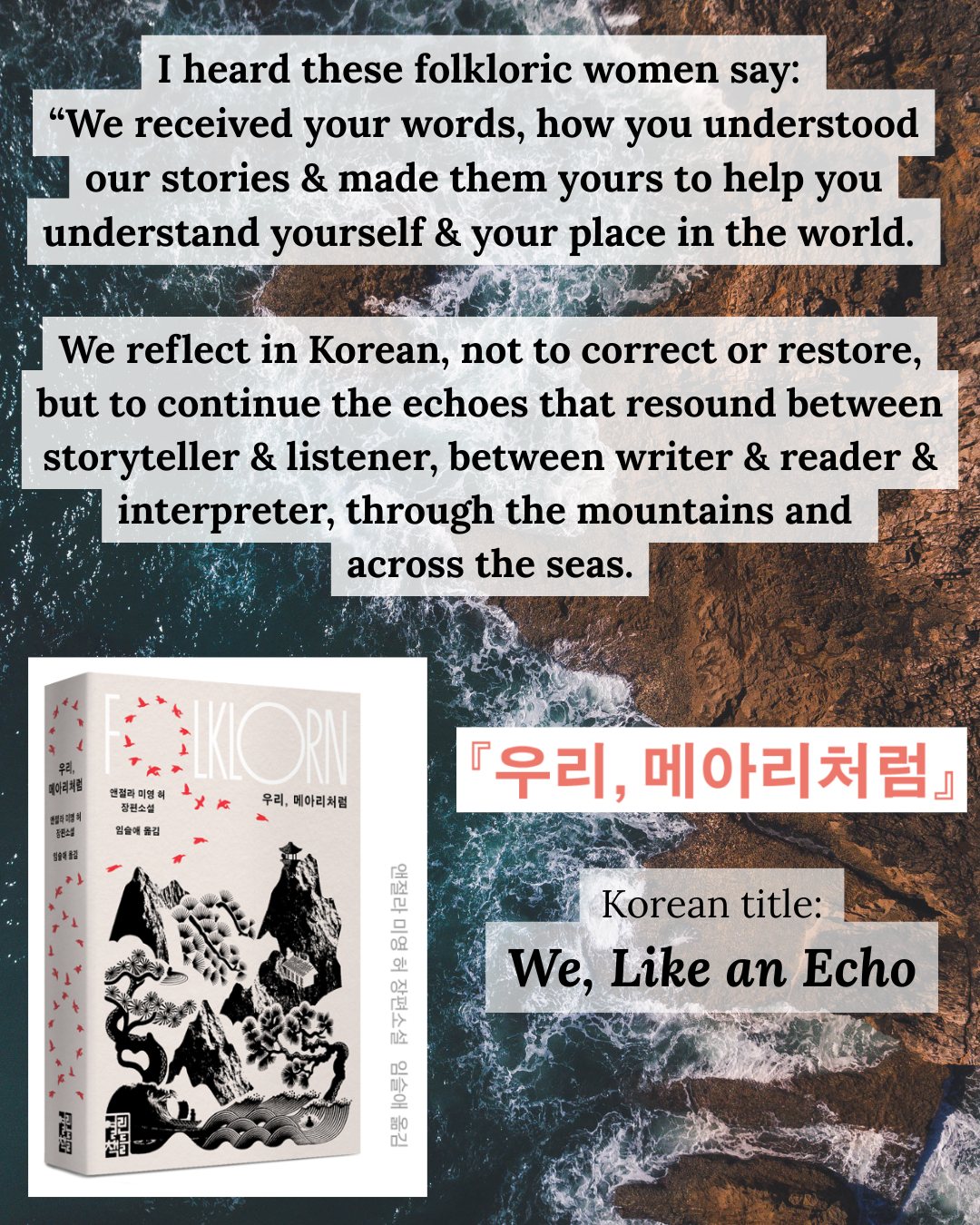
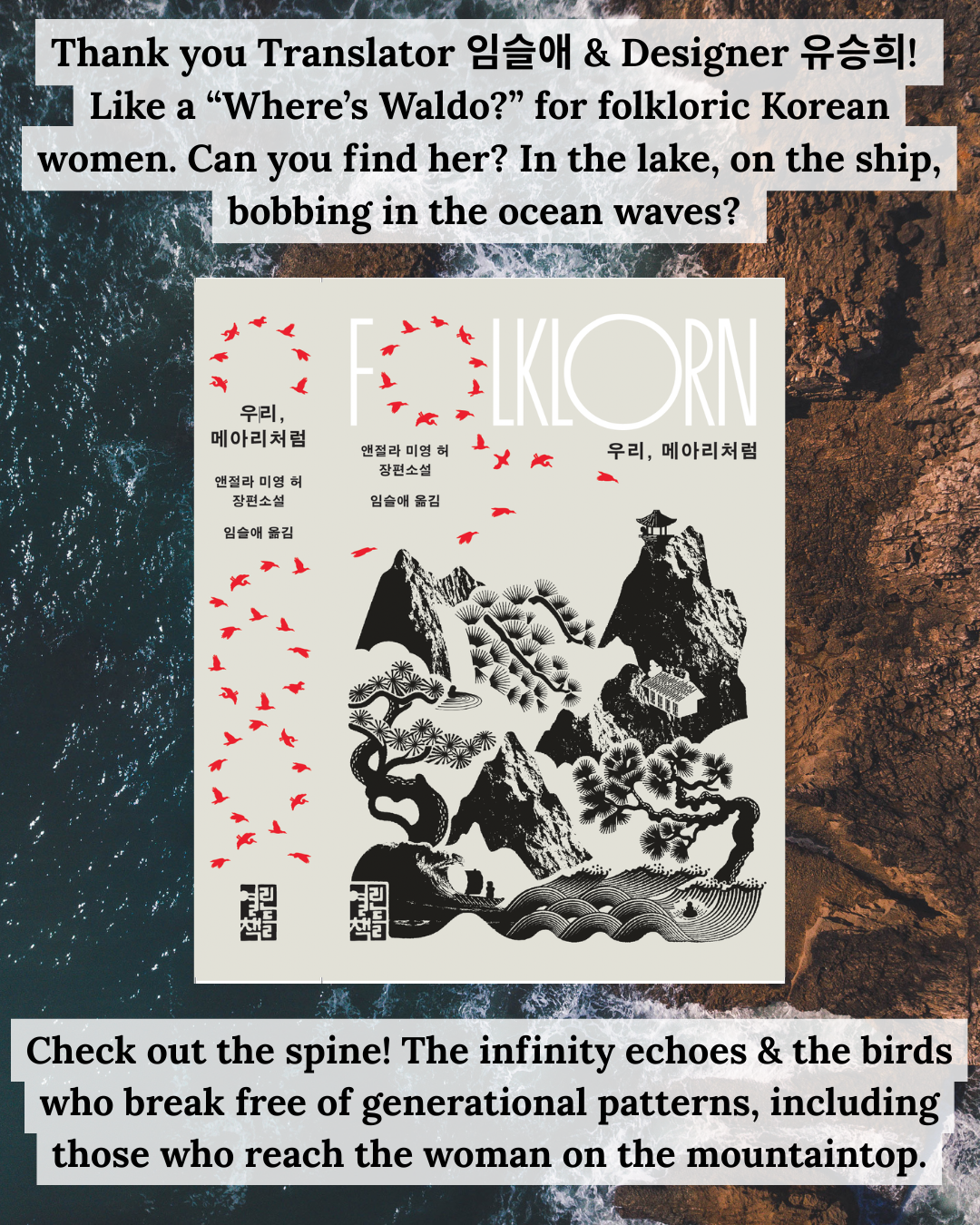
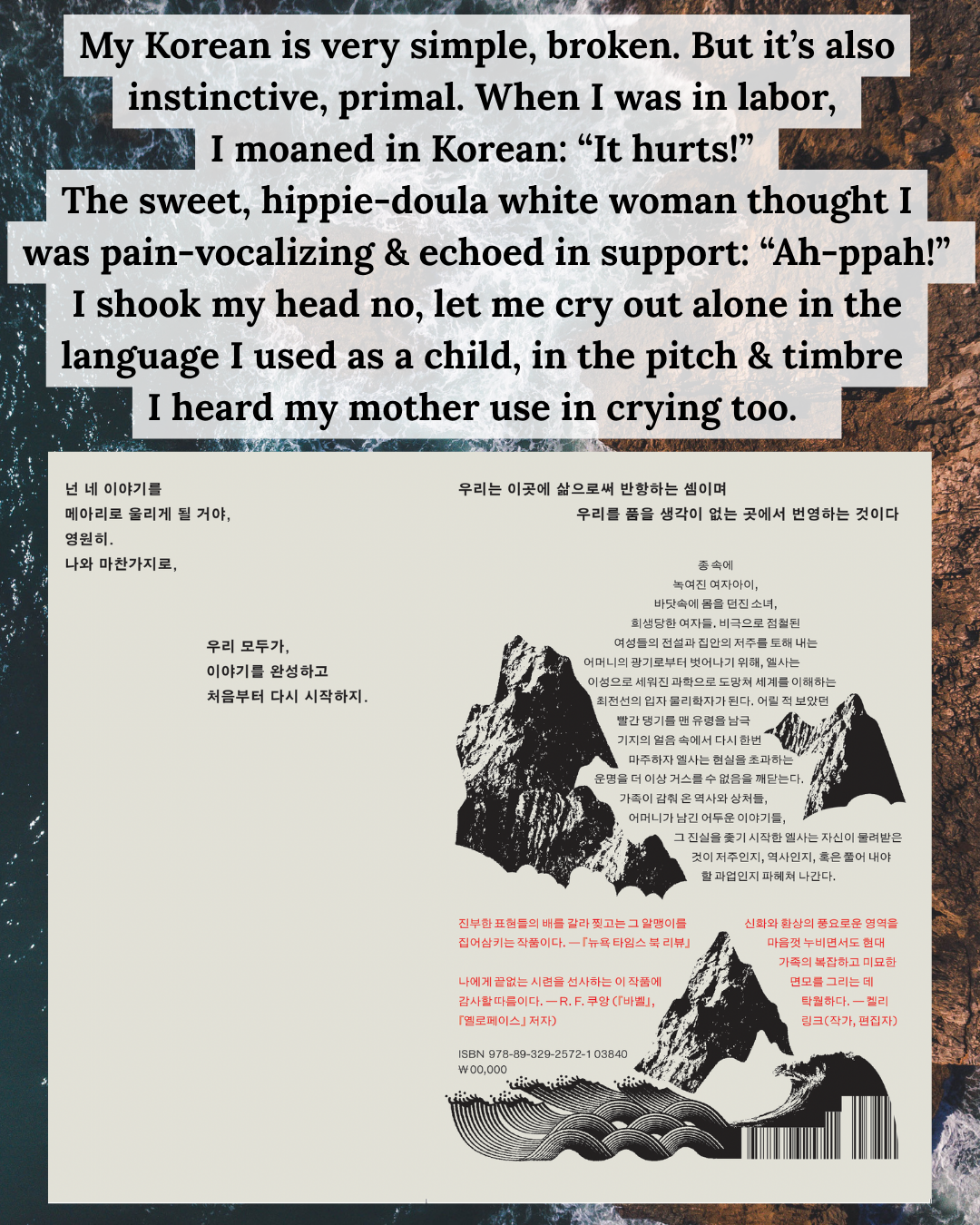
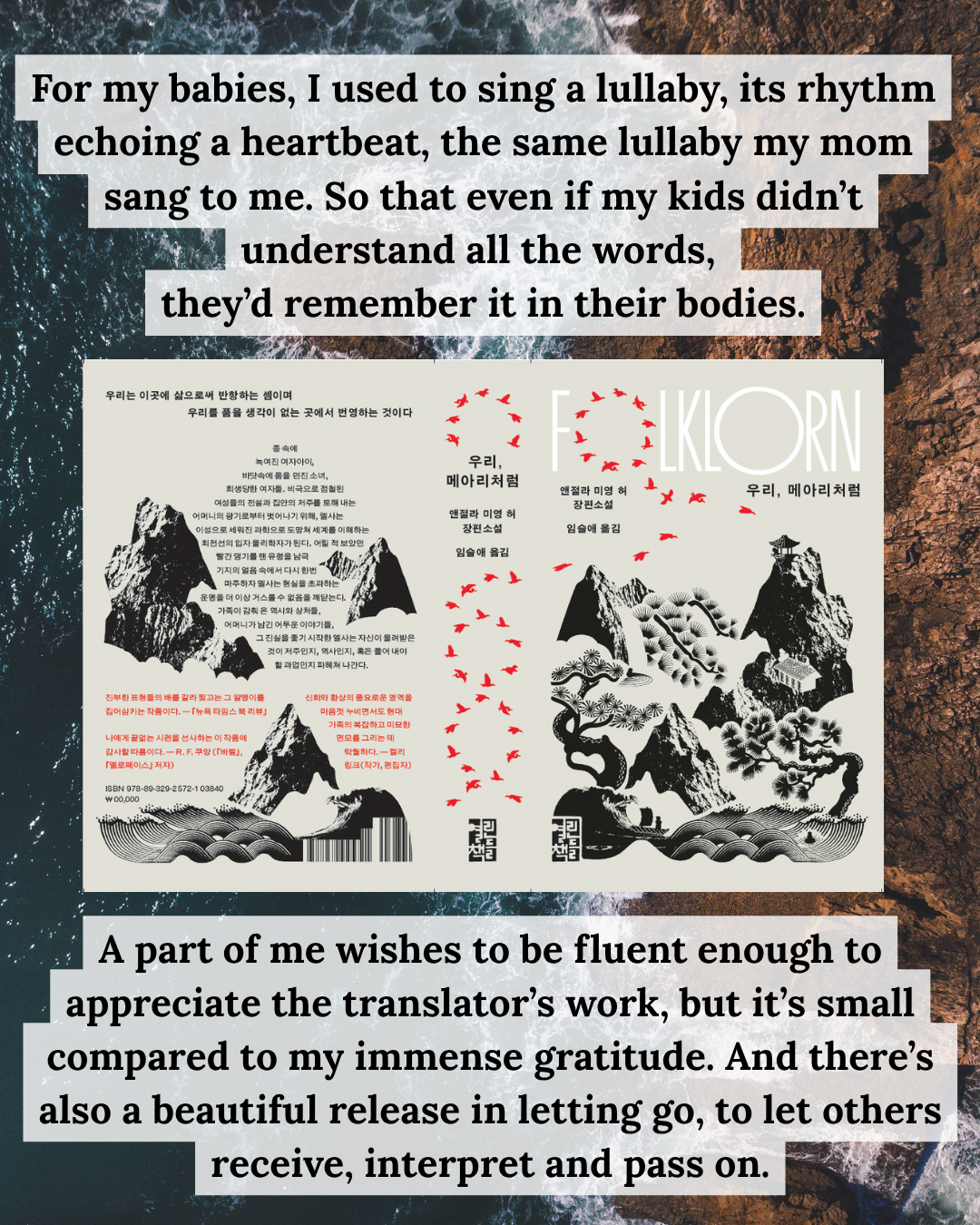
Korean translation by 임슬애 from Open Books
(Optioned by AMC TV Networks long ago)
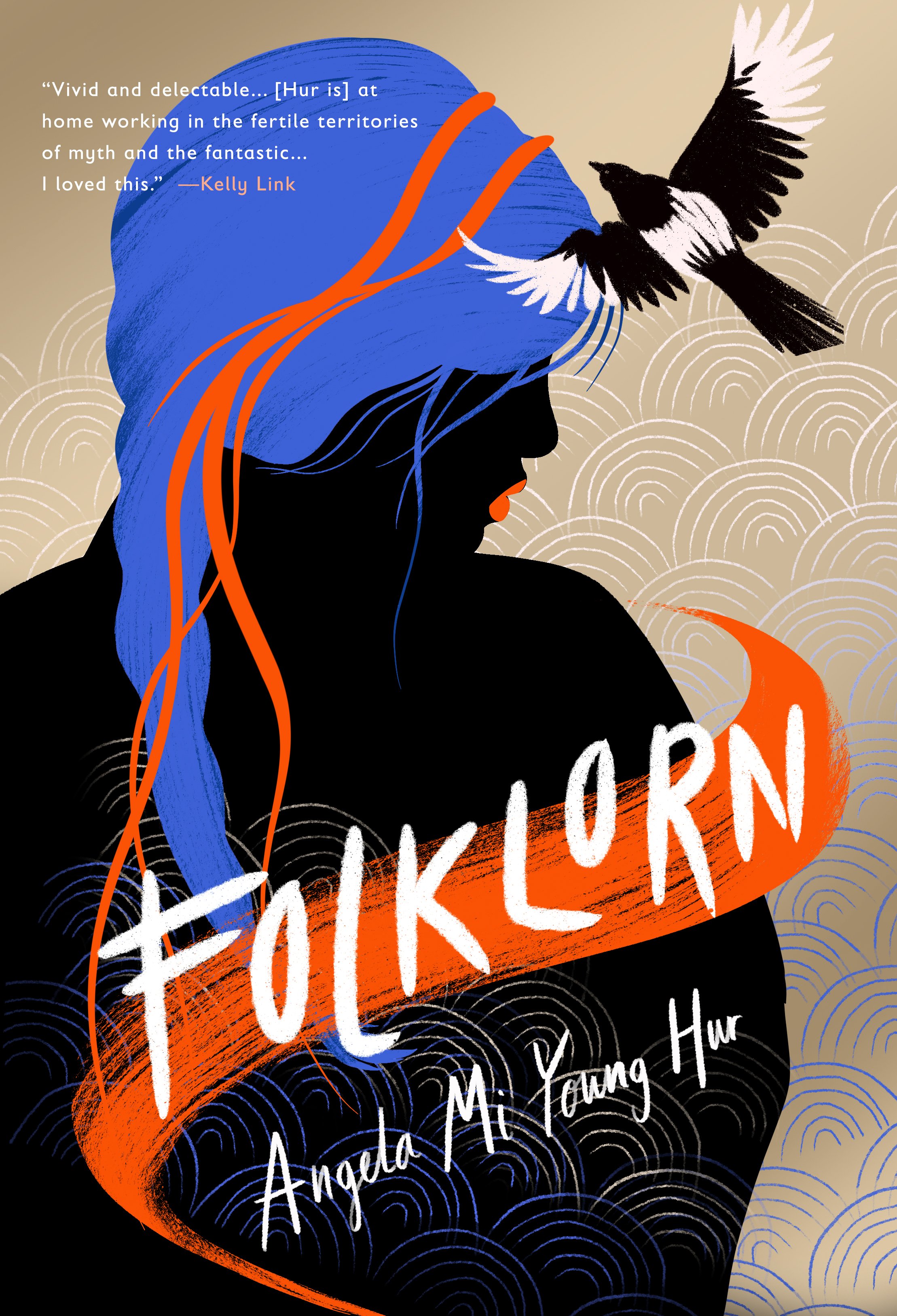
FOLKLORN
“Vivid and delectable. Angela Hur is equally at home working in the fertile territories of myth and the fantastic as in the nuanced portrayal of a contemporary, complex family. I loved this.”
— KELLY LINK, Pulitzer Prize Finalist, MacArthur Fellow, and National Bestselling author of GET IN TROUBLE
“Ghost story, family saga, parable, feminist reimagined myth: Angela Mi Young Hur’s hugely ambitious Folklorn is a spellbinding shape-shifter of a novel that tackles questions of race, culture, and history head-on, exploring the blurry boundaries between past and present, fact and fantasy, and personal and cultural—or cosmic.”
— CELESTE NG, author of OUR MISSING HEARTS and LITTLE FIRES EVERYWHERE
“Folklorn is a work of capacious, original imagination: part supernatural mystery, part immigrant family story. Hur’s mixing and melding of genres is an inventive, elegant means of illuminating the dualities of diasporic experience, as well as a testament to the essential role of stories in understanding our identities.”
—PETER HO DAVIES, author of THE FORTUNES and A LIE SOMEONE TOLD YOU ABOUT YOURSELF
“Angela Mi Young Hur’s Folklorn is a beautiful meditation on childhood trauma as well as an exploration into Korean heritage; it’s also a gorgeous journey into the intersection of science and myth and how our past traumas shape us – but how they need not define us.”
—SWAPNA KRISHNA, NPR Books
“This soulful saga is replete with evocative settings and masterfully crafted lives.”
-NEWSWEEK, 21 Best Books to Read This Spring 2021
New York Times Book Review, by Amal El-Mohtar
In many ways, Angela Mi Young Hur’s FOLKLORN is also about translation: translation as physical movement, from Korea to the United States to Sweden to Antarctica; secret knowledge translated across languages and time; and translation as interpretation across genres, from folk tales and family history to experimental physics and poetry.
Dr. Elsa Park has spent years trying to get as far away from her mother’s Korean myths as possible, and with them, her mother’s conviction that the women of their family are doomed to repeat the patterns of tragic folk tales: stories of girls stolen or sacrificed, lost and recovered. Elsa is determined to choose science over superstition, but while researching neutrinos — so-called ghost particles — in Antarctica, she succumbs to an old hallucination of ringing bells and a lovely, mysterious woman with red ribbons trailing from her long black braid. Thrown off balance, Elsa pivots her research toward reconciling the stories of her inheritance with her scientific work, in order to find a way into — and more crucially, a way out of — her mother’s tales.
Elsa’s voice is an elegant punch to the face, a series of refusals — of politeness, of fellow feeling, of any intimacy separate from brutality. She’s sometimes shockingly, almost helplessly cruel to people attempting to be kind to her, as if speaking around a mouth full of broken glass. I found myself loving her for the messiness of her overlapping truths, the mixture of resentment, fear, love and anger directed at her family, colleagues and would-be lovers.
Integral to “Folklorn” is a sense of stories as both constitution and escape, of their capacity to trap people as much by faulty representation as by erasure. When Elsa is young, her mother tells her that “our entire people have been telling the wrong stories, making a wretched mess of our history. … No wonder we get invasions and occupations, war. … What kind of stories, I wonder, do the white countries tell of themselves?” Once Elsa is grown, she paraphrases her mother despite herself, arguing that “by limiting the neutrino’s story, we’ve constrained our own cosmic existence.”
“Folklorn” loops in and out of itself like a ghost’s red-ribboned braids, like a woman’s voice harmonizing with its own echoes. It’s beautiful and hard and hungry, full of sharp, painful observations, slicing clichés open like prickly pears and devouring their hearts.